86-592-5659128 (to8016)
anna@xmydx.com English
 Deutsch
 español

20 YEARS Silicone manufacturer
86-592-5659128 (to8016)
anna@xmydx.com
20 YEARS Silicone manufacturer



2026-11-06
Short answer: A custom silicone utensil set typically samples in 3–7 days and produces in 5–30 days, with MOQ from 100–2,000 pcs per colour and per tool. The part that fails in the field is almost never the blade — it is the joint between blade and handle. Specify hardness per tool, not per set, and test the joint under load before you approve the sample.
This guide covers how utensils are built, why a set is harder to make than a single tool, what to put in the specification, and where the money actually goes.
• Hardness is per tool, not per set. A spatula at 50–60 Shore A and a turner at 60–70 Shore A are different compounds in the same box.
• The joint is the failure point. Ask for a pull and flex test on the blade-to-handle bond, not just a dimensional report.
• One-piece moulding is cheaper and stronger; two-material is better looking. Choose deliberately, because the tooling differs.
• Colour is a cost line. Every additional colour adds a clean-out and a minimum run per colour.
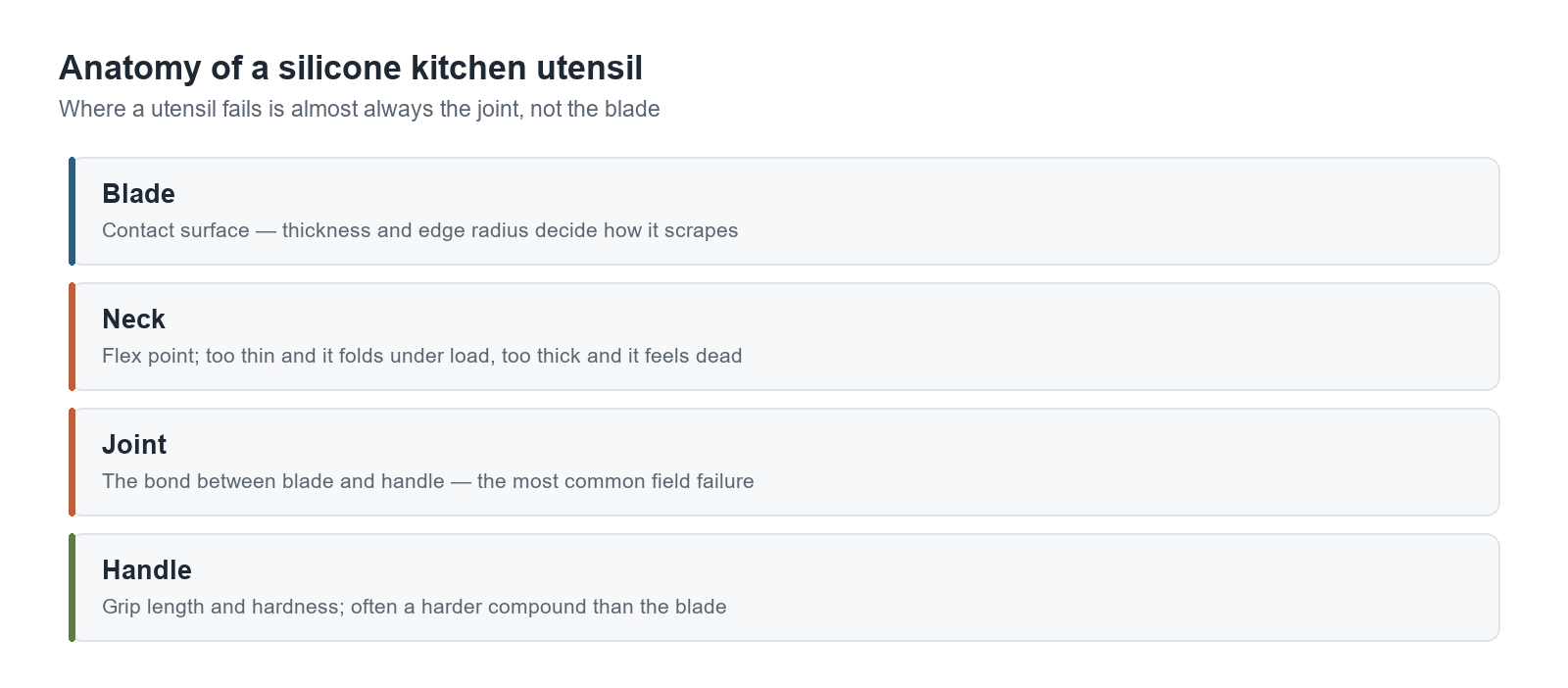
Figure 1. Four zones, four failure modes — the joint is the one that reaches the customer.
A single spatula is a straightforward moulding job. A six-piece set is a colour-matching, hardness-matching and packaging job with six tools, six cycle times and one shared retail box.
Three things go wrong at set level, and none of them show up on a single-part inspection report:
• Shade drift between parts. Parts moulded on different days, or from different compound lots, drift apart in colour. Under retail lighting, a set that looked matched in the sample room looks mismatched on the shelf.
• Hardness inconsistency. A set specified as "medium silicone" can arrive with a soft spatula and a hard spoon, because each tool was quoted separately.
• Packaging fit. Inserts are tooled to the sample, not to the production part. A 2 mm length change breaks the insert.
The fix is procedural: one colour standard per set, one hardness call-out per tool, and a first-article check that assembles the full set in its packaging.
|
Zone |
Function |
Design note |
|
Blade |
The working surface |
Edge radius and thickness decide how it scrapes; too sharp and it scratches non-stick coatings |
|
Neck |
Flex point |
Too thin and it folds under load; too thick and the tool feels dead |
|
Joint |
Blade-to-handle bond |
The most common field failure — specify a pull test |
|
Handle |
Grip and balance |
Often a harder compound; length affects leverage |
|
Approach |
Advantage |
Trade-off |
Best for |
|
One-piece moulded |
No joint to fail; lowest tooling; fastest cycle |
Single hardness; limited colour contrast |
Value sets, promotional lines, high volume |
|
Two-material (hard core + soft grip) |
Better grip, premium look, colour contrast |
Two tools, two shots, a bond that must be validated |
Mid-to-premium retail, gift sets |
If the set is going to a discounter, one-piece wins on cost. If it is going to a design-led retailer, two-material wins on shelf presence — but only if the bond is tested, because a soft grip that separates in a dishwasher is a return, not a repair.
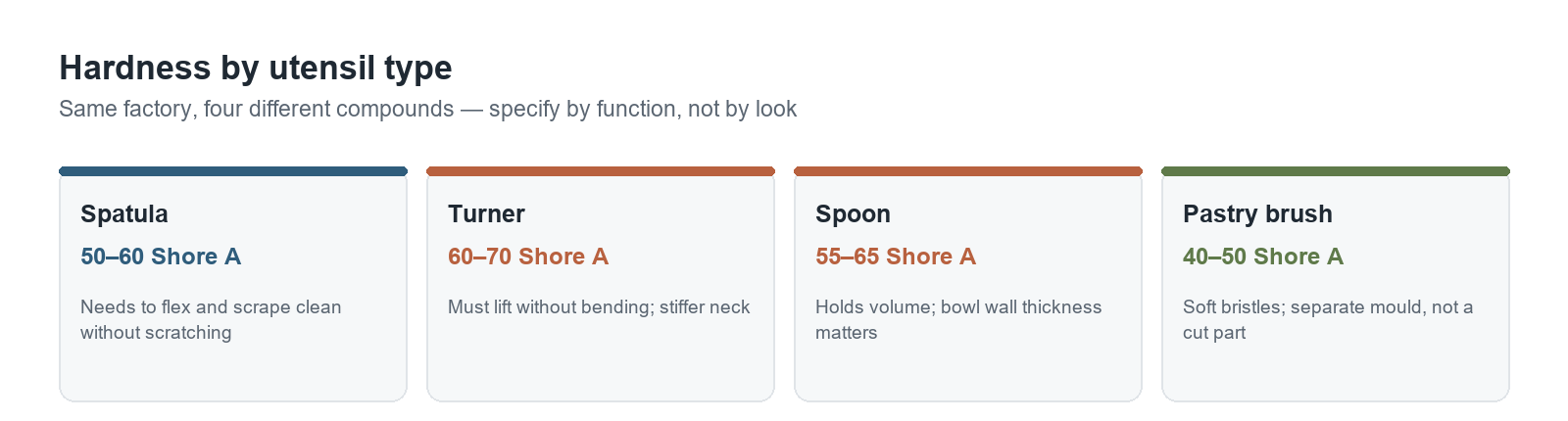 Figure 2. Four tools, four compounds — specify each one separately.
A set quoted as "one compound" is a set that will feel wrong somewhere. The blade needs to flex; the turner needs to lift; the spoon needs to hold volume; the brush needs soft bristles.
Hardness also interacts with heat. A softer compound loses stiffness faster in a hot pan, which is why a spatula that feels right at room temperature can feel floppy when it is actually being used.
State the hardness and tolerance for each part in the set — for example 55 ±5 Shore A for the spatula and 65 ±5 Shore A for the turner. One number for the whole set is not a specification.
Most food-grade silicone handles about 230 °C / 450 °F. Silicone utensils are usually left in the pan, so the continuous rating matters more than the peak.
Tomato, turmeric and oil are the three stains that generate complaints. Ask for a stain test on the actual colour, not on white — dark and saturated colours hide staining, pastels do not.
A pull test plus a flex-cycle test on the blade-to-handle bond. This is the single most useful line item you can add to an inspection plan.
A utensil that is too light feels cheap; one that is too heavy tires the wrist. Balance is a specification, and it is set by handle wall thickness, not by the blade.
Food-contact compliance is the same story as any silicone houseware: FDA 21 CFR 177.2600 for the US and LFGB for Germany and the EU, tested on the finished part. A compound certificate does not cover the moulded article, and a "BPA-free certificate" for pure silicone certifies nothing — silicone does not contain BPA in the first place.
Two claims that do carry weight in this category: the migration test report, and a post-cure declaration. Peroxide-cured parts can carry odour into a hot pan, which is exactly the complaint that ruins a utensil listing.
1. Blade edge — radius check, no flash or sharp line
2. Joint — pull test and flex cycling
3. Hardness — per part, against the call-out
4. Colour — full set assembled under retail light
5. Stain — tomato and oil, on the production colour
6. Odour — sensory check after post-cure
• Number of tools in the set — six parts means six tools and six set-ups
• One-piece vs two-material — the second shot adds cost and a bond validation
• Colour count — each colour carries a minimum run and a clean-out
• Packaging — printed insert, window box or hang card, and who supplies the artwork
• Order quantity — below about 2,000 pcs per colour, tooling dominates the unit price
A six-piece set quoted at a surprisingly low price is usually a one-piece set in one colour, packed in a poly bag. That is a legitimate product — it is just not the product the buyer thought they were comparing.
What is the MOQ for a custom silicone utensil set? MOQ typically runs from 100 to 2,000 pcs per colour and per tool. Multi-piece sets are usually quoted per colourway, because each colour needs its own run.
How long does sampling and production take? Sampling is 3–7 days for silicone parts; a full set may need a second round for colour matching. Production runs 5–30 days depending on quantity and colour count.
Can I mix hardness within one set? Yes, and you should. Different tools need different compounds. Specify hardness per part and confirm the factory quotes them separately.
Are silicone utensils safe for non-stick pans? Yes, which is the main reason the category exists. Blade edge radius matters: a sharp moulded edge will still scratch a coating over time.
Can you do private label and custom packaging? Yes — logo embossing on the handle, custom colour, printed insert and retail box. Send the artwork with the enquiry so packaging is costed with the set, not after.
How do I stop colours drifting between parts in a set? Fix one colour standard for the set, mould all parts from the same compound lot where possible, and approve a fully assembled set under retail lighting rather than individual parts.
About Xiamen Yidexin Silicone Rubber Industrial Co., Ltd. Founded in 2004 in Xiamen, China, Yidexin moulds custom silicone houseware, baby products and OEM parts. The factory runs 10 production lines with 50+ QC staff; total staff 109, including 5+ certified engineers. Intertek onsite verified in January 2026. Hardness range 20–80 Shore A; MOQ 100–2,000 pcs; sampling 3–7 days for parts. See household supplies or send your drawing.

2F/YISHENG BUILDING,1ST INDUSTRIAL ZONE,DIANQIAN,HULI DISTRICT,XIAMEN CITY,CHINA
86-592-5659128 (to8016)
+86-592-5785493
+86-13850076578
Freundliche Links :
marijuana420packaging© 2016 XIAMEN YIDEXIN SILICONE RUBBER INDUSTRIAL CO.,LTD Alle Rechte vorbehalten dyyseo.com
Online Contact
 86-592-5659128 (to8016)
 anna@xmydx.com
 +8613606037597+8613850076578
top