86-592-5659128 (to8016)
anna@xmydx.com English
 Deutsch
 español

20 YEARS Silicone manufacturer
86-592-5659128 (to8016)
anna@xmydx.com
20 YEARS Silicone manufacturer



2026-11-06 11:46:09
Short answer: A custom silicone keypad usually takes 10–15 days to sample and 5–30 days to produce, with MOQ starting at 100–2,000 pcs depending on the design. The two specifications that decide how the keypad feels are hardness (typically 40–60 Shore A) and actuation force — get those two wrong and the part will pass inspection but still feel cheap in the customer's hand.
This guide covers how keypads are built, which type fits your product, what to send a manufacturer, where cost actually comes from, and how to tell a real factory from a trading company.
• A custom keypad samples in 10–15 days and produces in 5–30 days; MOQ is typically 100–2,000 pcs.
• Hardness (40–60 Shore A) and actuation force in grams decide how the key feels — specify both numerically.
• Cost is driven by tooling complexity, carbon pill count, backlighting and tolerance, not by key count.
• A supplier who quotes without your STEP file and annual volume is guessing.
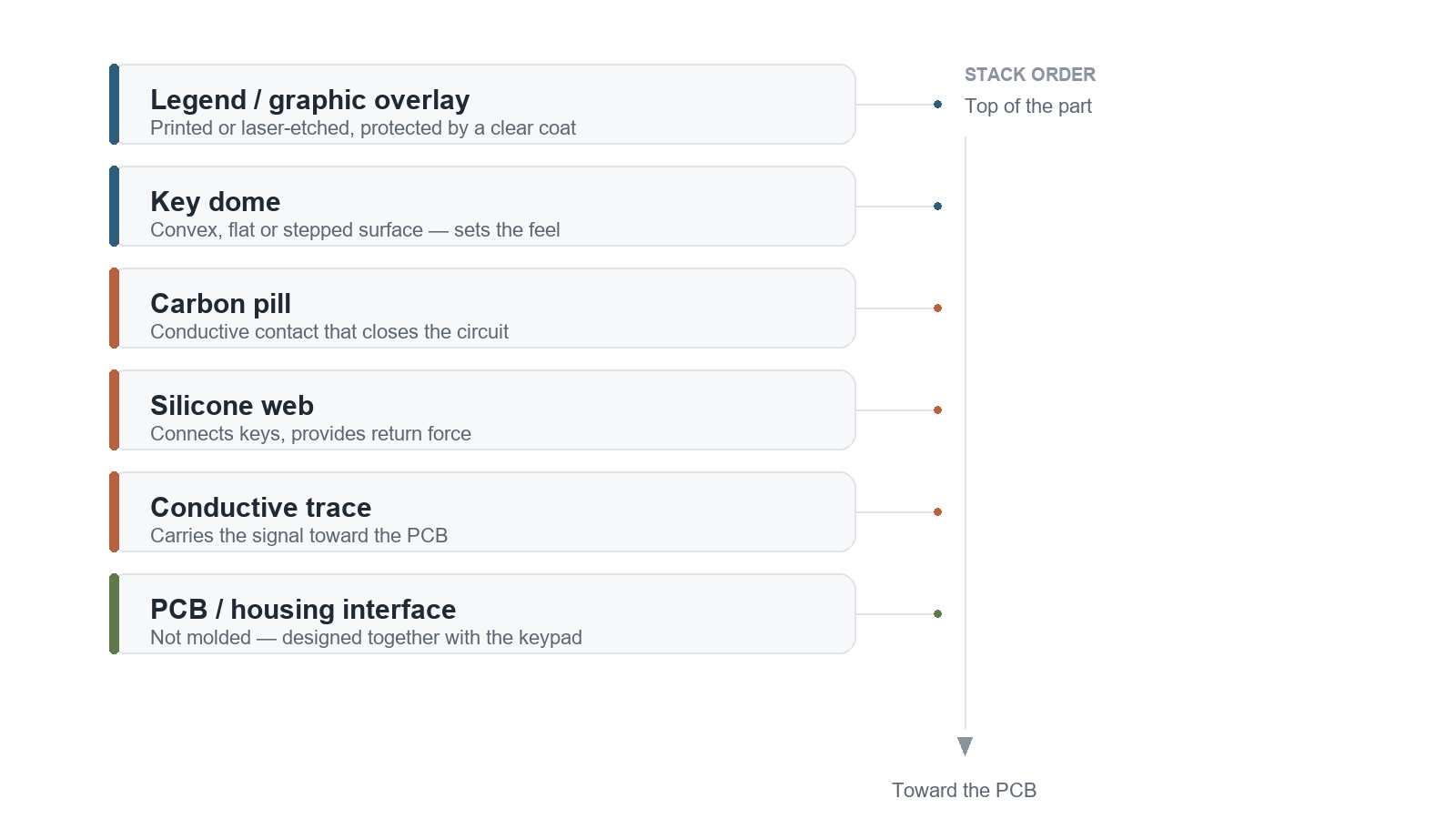
Figure 1. The functional layers molded into a single silicone keypad.
A silicone keypad is not a printed membrane and not a rubber stamp. It is a molded silicone rubber part with functional elements molded into it:
|
Element |
Function |
Design note |
|
Web / diaphragm |
Connects keys and provides return force |
Thinner web = lighter press, shorter life |
|
Key dome |
The raised button surface |
Convex, flat, or stepped |
|
Carbon pill |
Conductive contact that closes the circuit |
One per key; position tolerance matters |
|
Conductive traces |
Carries signal from pill to PCB |
Printed or molded carbon |
|
Actuation pillar |
Transfers force onto the PCB dome or tact switch |
Length controls travel |
|
Backlight layer |
Light guides for LED or EL backlighting |
Needs light-transmitting silicone |
|
Surface finish |
Matte, glossy, or textured |
Affects feel, glare, and fingerprint visibility |
Because all of this is molded in one shot, the tool has to be right the first time. That is why the drawing review stage matters more than the price negotiation.
|
Type |
Best for |
Typical hardness |
Watch out for |
|
Flat / non-tactile |
Remote controls, appliance panels, low-cost consumer electronics |
40–50 Shore A |
No tactile feedback — users press harder than needed |
|
Convex tactile with carbon pill |
TV remotes, set-top boxes, industrial controllers |
45–60 Shore A |
Inconsistent feel if web thickness varies across the tool |
|
Backlit / laser-etched |
Automotive, medical, premium consumer products |
50–60 Shore A |
Light bleed between keys; needs a light-blocking layer |
|
Waterproof / sealed |
Outdoor equipment, kitchen appliances, medical devices |
50–60 Shore A |
Sealing geometry must be designed in, not added later |
|
Keypad + plastic housing (2K) |
Handheld devices needing structure and grip |
50–70 Shore A |
Two materials, two tools, longer project timeline |
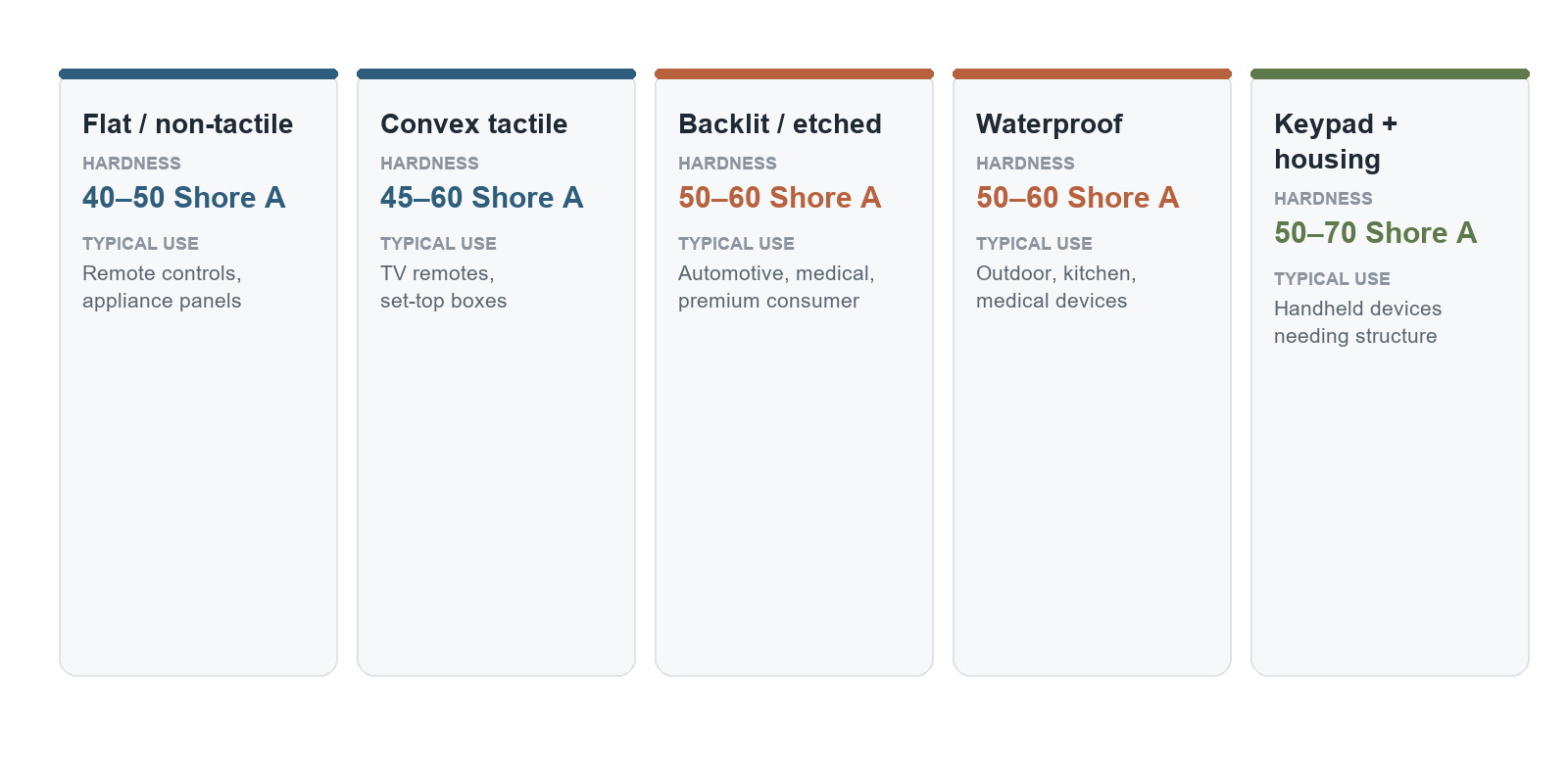
Figure 2. Keypad types by hardness band and typical application.
Most buyers arrive asking for "a rubber keypad." The right question is what does the user's thumb need to feel — and that determines the type, the web thickness, and the hardness.
A factory cannot quote accurately from a photo. Send this and you will get a real number instead of a range:
1. 3D drawing (STEP, IGES, or STP) or a 2D drawing with dimensions and tolerances
2. Key layout and count — including which keys need carbon pills
3. Actuation force target (grams-force) and travel
4. Hardness in Shore A
5. Color — Pantone reference, and whether the color must match a painted housing
6. Surface finish — matte, glossy, or texture number
7. Backlight requirement — none, LED, or EL; light color and brightness
8. Operating environment — temperature range, chemicals, UV exposure, washdown
9. Annual volume and first order quantity
10. Compliance target — RoHS, REACH, food contact, or medical
If a supplier quotes without asking for at least items 1, 2, and 9, the number is a guess.
Hardness is measured on the Shore A scale (tested per ASTM D2240). For keypads, the working range is narrow:
|
Shore A |
Feel |
Typical use |
|
30–40 |
Very soft, gummy |
Sealing lips, soft-touch grips |
|
40–50 |
Soft, easy press |
Consumer remotes, low-force panels |
|
50–60 |
Firm, defined click |
Most appliance and industrial keypads |
|
60–70 |
Hard, crisp |
Harsh-environment and high-cycle panels |
|
70–80 |
Rigid rubber |
Structural parts, not key surfaces |
Actuation force is a separate number and is set by web thickness, dome height, and pillar length — not by hardness alone. A 50 Shore A keypad can be designed to press at 150 g or at 400 g. Always specify force in grams, not "soft" or "firm."
Commercial hardness tolerance is typically ±5 Shore A. If a supplier promises ±2, ask which test method and which lab.
Buyers usually assume price scales with the number of keys. It does not, not primarily. Cost is driven by:
• Tooling complexity — number of cavities, slides, and the finish requirement
• Carbon pill count — each pill is an added operation
• Backlighting — light-transmitting silicone and additional assembly steps
• Tolerance — tight dimensional or force tolerances slow the cycle
• Order quantity — tooling amortization dominates at low volume
• Color matching — custom Pantone adds setup and scrap
At 100–500 pcs, tooling is most of your unit cost. At 50,000 pcs, the press cycle and yield rate dominate. This is why the same drawing can produce quotes that differ by 3× — the suppliers are not quoting the same scope.
Ask these five questions before you place a production order:
1. Is the keypad functionally tested, or only visually inspected? Visual inspection will not catch a dead key.
2. How is actuation force verified — on a force gauge, sample size per lot?
3. What is the carbon pill placement tolerance, and how is it measured?
4. How many QC staff are on the line, and are they independent of production?
5. Can I see the last three inspection reports for a comparable part?
A factory with a dedicated QC team and documented inspection reports will answer these in one email. A trading company will forward the question to someone else.
Monthly capacity is a headline number. What matters for your delivery date is how much of that capacity is already committed and how the press schedule handles color changes.
Ask for:
• Current load on keypad presses (as a percentage)
• Standard production lead time for your quantity
• Whether your order would run on a dedicated press or share one
• The changeover time between colors and materials
A factory running 10 production lines with a separate clean room can usually absorb a new program without pushing existing customers — but only if the schedule is visible. Ask to see it.
Before you commit to a keypad program, confirm:
• [ ] The supplier manufactures in-house (ask for a live video walkthrough of the press line)
• [ ] Tooling is built and maintained in-house or by a named partner
• [ ] In-house engineering can review your 3D file and flag moldability issues
• [ ] Sampling timeline is committed in writing
• [ ] Hardness and actuation force are specified numerically, not verbally
• [ ] Inspection reports are available for comparable parts
• [ ] The supplier has handled your compliance target before (RoHS, food contact, medical)
• [ ] IP and tooling ownership terms are in the contract
How long does a custom silicone keypad take to produce? Sampling takes 10–15 days for keypads (3–7 days for simpler silicone parts). Production runs 5–30 days depending on quantity, color changes, and current press load.
What is the minimum order quantity? MOQ is typically 100–2,000 pcs depending on the product and tooling. Simple parts can start near 100 pcs; multi-key backlit keypads with new tooling usually start higher.
What hardness should a silicone keypad be? Most keypads sit between 40 and 60 Shore A. Below 40 the key feels mushy and returns slowly; above 60 it feels hard and the press force climbs. The right number depends on the web thickness and the force target.
Can you make a waterproof keypad? Yes — sealing is a geometric design decision, not an additive. The seal lip, compression ratio, and housing interface must be designed together with the keypad.
Do you support backlit keypads? Yes. Backlighting uses light-transmitting silicone with a light-blocking layer between keys; laser-etched legends control where light exits.
Can you produce licensed or branded products? Yes. Licensed products are supported, subject to documentation of authorization from the brand owner.
About Xiamen Yidexin Silicone Rubber Industrial Co., Ltd. Founded in 2004 in Xiamen, China, Yidexin manufactures custom silicone keypads, OEM silicone parts, silicone watches, baby products and houseware. The factory runs 10 production lines with a monthly keypad capacity of over 1,000,000 pcs. Total staff 109, including 5+ certified engineers; Intertek onsite verified in January 2026. Hardness range 20–80 Shore A, MOQ 100–2,000 pcs, sampling 3–7 days for parts and 10–15 days for keypads. Request a quote or see silicone keypad and keyboard products.
2F/YISHENG BUILDING,1ST INDUSTRIAL ZONE,DIANQIAN,HULI DISTRICT,XIAMEN CITY,CHINA
86-592-5659128 (to8016)
+86-592-5785493
+86-13850076578
Freundliche Links :
marijuana420packaging© 2016 XIAMEN YIDEXIN SILICONE RUBBER INDUSTRIAL CO.,LTD Alle Rechte vorbehalten dyyseo.com
Online Contact
 86-592-5659128 (to8016)
 anna@xmydx.com
 +8613606037597+8613850076578
top